






P H I L O S O P H Y P A T H W A Y S
http://www.philosophypathways.com/newsletter/
Issue number 95
22nd November 2004
CONTENTS
I. 'Arguments Beyond Reason' by Jeff Meyerhoff
II. 'Essay on Right and Wrong' by Richard Vincent Grear
III. 'Epigrams on Metaphysics' by Vinayak Shankar
-=-
EDITOR'S NOTE
Within the space of one week I received three remarkable pieces of work, which
are here published together, although in terms of approach and inspiration the
essays could not be further apart.
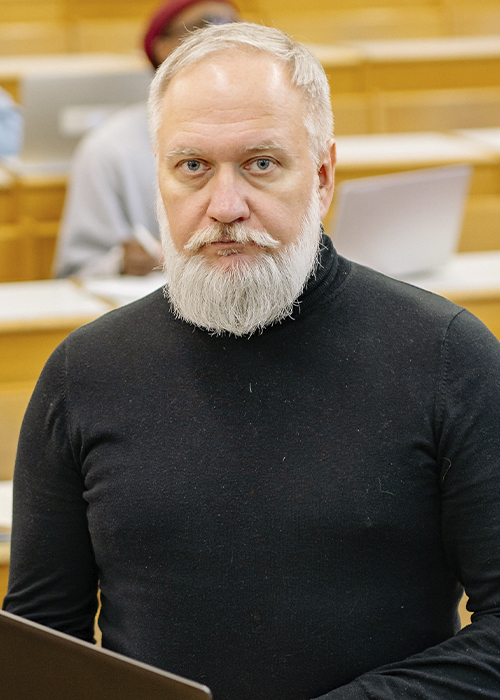
Jeff Meyerhoff is an independent scholar who has been studying philosophy and
other disciplines for some twenty years. 'I recently started doing my own
work,' he writes. 'Since I have no philosophy peer group, I have no way of
getting informed opinion about its quality... I haven't seen what I'm arguing
in the literature, but not being immersed in a philosophical community makes it
easy to miss important work and fool yourself into thinking you've contributed
something original when you haven't.'
Richard Grear is just 17 years old. He writes, 'It is so very relieving that I
found someone who understands what I am talking about. My family rejects my
realizations. They just don't see what I see... Whether or not I am going to
college is still up in the air. If I do go, I would definitely take philosophy
as a minor. Even if I never go to a college, I still plan on educating myself
to the fullest extent with books (heaps of books!).'
Vinayak Shankar is 25. 'I have seriously decided to dedicate my remainder of
this life to write some inspirational lines. Struggling between success and
failure, I feel confused to make a decision... I am surrounded by people who
worship God but do not realize his presence in every atom around us... I never
know what the future holds for me but to me it's meaningless if I don't do what
I feel.'
I am prepared to stick my neck out and state that, in my view, each of these
pieces of work is evidence of an original, authentic and deep attempt to
grapple with the nature of the human predicament. Take your time, and enjoy!
Geoffrey Klempner
-=-
I. 'ARGUMENTS BEYOND REASON' BY JEFF MEYERHOFF
Rationally Justifying the Exploration of the Psychological Bases of Beliefs
'... truth thus rests in the end on belief and, even more
ultimately, on the affective attitudes.'[1]
Donald Davidson
It's commonly thought that once the participants in a rational discussion have
exhausted all rational means of coming to agreement there is nothing more to do
except to agree to disagree. By following a line of thought justified by current
outcomes in contemporary analytic philosophy, I argue that there is a further
investigation that rational discussants can pursue which is called for because
our deeply held beliefs are held for non-rational rather than rational reasons.
I further argue that this exploration into the basis of belief - rather than the
belief itself - does, contrary to the genetic fallacy, affect truth and
objectivity. While distasteful for most intellectuals to contemplate, the basis
of individual beliefs in personal psychologies makes necessary the individual
and joint exploration of the irrational.
The genetic fallacy says that the origin of a person's intellectual views plays
no role in determining the validity of those views. The validity lies in whether
the views are valid according to the criteria of valid knowledge claims, such as
agreement with the facts, consistency or the way the world is. For example,
Heidegger's psychology and beliefs as a Nazi sympathizer tell us nothing about
whether his philosophy is true or false, right or wrong. Those who refer to the
psychology of the believer to undermine the validity of a thinker's beliefs are
said to be using an ad hominem analysis and committing the genetic fallacy.
According to the genetic fallacy, a psychological explanation of why someone
believes as they do is beside the point; it could be an interesting empirical
investigation in the field of psychology, but it is thought to play no role in
determining what is true.[2]
The genetic fallacy assumes that there is a right representing that some
beliefs do and that we can determine which beliefs represent rightly and which
do not; that reality impresses itself upon some people, making their beliefs
true, and is missed by others, necessitating finding another origin for their
mistaken beliefs. Yet in philosophy it is readily admitted that we do not have
a theory of truth or an epistemology which has been conclusively proven to be
true.[3] Moreover, the very project of explaining our connection to, and
knowledge of, a reality beyond us has been brought into serious doubt.[4]
Finally, the very question of the existence of reality is "hotly debated."[5]
If we take seriously this historical failure to reach consensus on our
connection to, knowledge of and the existence of reality we have to conclude,
for now, that it is false to compare an imagined right relation to reality
which makes some beliefs true and a mistaken relation that makes other beliefs
false.
If we examine our reasons for believing what we believe beyond the
reason-giving we do to defend our beliefs we find the animating core which
motivates us to have the beliefs that we have and deploy the reasons that we
do. The reasons we give for believing as we do are not the real reasons we
believe because they always ultimately end in circularity, regress or
assumptions.[6] Since all belief-systems if pursued far enough will end in
circularity, regress or assumptions we cannot say that reasons are what
ultimately cause us to believe. There must be something else which causes us to
adopt our particular chain of reasons or web of beliefs. Since in terms of their
ultimate rational foundation our belief system is as good as an opposed
belief-system, there must be something else which causes us to choose, and
which holds us to, our particular belief-system. What is characteristic of us
is not only the combination of beliefs we have woven together, since everyone
does that with greater or lesser originality, but why we adhere to this, rather
than that, belief-system. In our rational discussions there is a way in which we
completely miss the point since it is not the reasons we are deploying that
cause us to believe. If we are trying to convince another person or challenge
our own beliefs then we should, for more efficiency, go to the source of the
belief, which is the emotional and psychic need to have the world be the way we
believe it is.
According to Pascal, "The heart has its reasons, which reason does not know."
In contrast, I am arguing that the subterranean psychic world of the heart
lying beneath reason that gives our beliefs their animating force can be better
known. The many tools of psychological analysis developed over the course of the
20th century can be used for self and other analysis in a productive way.
Normally, if this kind of analysis of another is deployed in a rational
argument it is a sign that rational argumentation has broken down and some
other reason for our opponents' mistaken obstinacy must be found. But because
all of us ultimately adhere to our beliefs for non-rational reasons, this kind
of psychological analysis of belief can be used to understand those reasons.
Using a depth psychological approach to understand the psychological origins of
belief we can uncover the reasons beyond reason that cause us to believe.
An illustrative example of this kind of investigation is conveniently
ready-to-hand: my own psyche. I have discovered that I contain an uneasy mix of
a dominant Chomskyan-Marxian, socialist, political-economic worldview and a
subterranean and unintegrated (Ayn) Randian libertarianism. The socialism has
part of its psychic origins in an unfair familial structure which allotted the
intrinsic good of attention unfairly. I was in a rigged competition with an
older sibling in which I didn't get the goods. The resulting unconscious
frustration and anger caused me to be relentlessly critical of any status quo.
The socialist ideal of a fair distribution of goods acts, in adulthood, as a
political corrective to a personal need and a standard by which to measure a
political-economic reality that never measures up. Marx's impassioned writings
against capitalist competition offers an inspiring social and economic ideal
and, on another level, a symbolic relief from a sibling competition I was
resigned to losing.
This same situation produced a shadow political-economic vision. The lack of
familial goods caused disappointment and withdrawal. A false self-sufficiency
was created since caregivers could not be relied upon and healthy dependency
seen as a danger. This false self-sufficiency thinks of itself as a healthy
autonomy. The need to not need anyone and to "pull myself up by my own
bootstraps" laid the foundation for an anti-socialist, uncompassionate
libertarianism which believes that "it is every man for himself."
Notice that the shadow worldview is described more negatively as a pathological
outcome. It wouldn't describe itself in that way as evidenced by those who hold
such views as their dominant belief-system. So a further exploration here would
be how one political-economic vision gained ascendancy and the ways in which the
dominant vision holds sway through an invidious characterization of the
subordinate worldview. The speculation then suggests itself: what would it be
like experientially to actually be that shadow self?
These two political-economic outlooks could be integrated into a libertarian
socialism which Chomsky has described. And they are integrated, to a small
degree, on the level of political ideals and when forming opinions on current
political events. But on a deeper level they remain largely unexamined. The
emotional substructure of belief animates the political beliefs and holds them
within certain bounds. The political views can be refined and broadened on the
intellectual level through the usual means of reading, discussion and political
action. But an additional method is to explore the psychic terrain from which
these beliefs grew and upon which they are still dependent. As long as this is
not done these beliefs will repetitively have to do the psychic work of
satisfying primary needs in never-quite-satisfying secondary ways. The
examination of the shunned Randianism may release new energies and create a
novel political integration, or it may just allow a deeper more sympathetic
appreciation of the character of an alien view. There's no guarantee that an
integration of the other may result.
An example of this broadening and deepening which did not result in a change in
belief can be found in George Lakoff's study of liberal and conservative
mindsets.[7] In studying conservatives, Lakoff, a liberal, tried to appreciate
the alien conservative views as sympathetically as possible and, while not
changing his liberal views, reports a much greater understanding of why
conservatives believe as they do and a deeper understanding of, and commitment
to, his own liberal beliefs. Greater insight resulted from an exploration of
the experiential basis of beliefs. New political encounters will be engaged
with a different understanding and produce different knowledge and the creation
of different truths.
An interactive, as opposed to an individual, psychological analysis of beliefs
would allow us to pursue debate beyond disagreement. The purpose of rational
argumentation is to determine what is true or right.[8] When two or more people
debate, the goal is to gain agreement; if they come to agreement they are done.
This often does not occur. If the debate ends in disagreement what are the
debaters to do? They must agree to disagree. I am proposing that there is more
to be done.
The predominant way of thinking regarding rational debate is that the debate
participants share the same objective world which is the guarantor of reaching
truth. If the debaters follow rational procedures of argumentation in an
unbiased fashion then they should eventually come to agreement about whatever
matter they are discussing because all participants should agree that the most
rational understanding of the issue will represent best the one reality that
the participants are trying to get right using their reason.
For those non-realists who believe there is not one reality we share, another
neutral guarantor of correctness might be thought to be our criteria for valid
knowledge claims. It may be hoped that our criteria of valid knowledge claims,
such as simplicity, plausibility, consistency, adherence to the facts and
coherence, could provide a neutral criteria of validation, but here too a
rational foundation for these values is missing. Hilary Putnam argues that even
seemingly neutral rational criteria such as simplicity, plausibility,
consistency and coherence are themselves values - epistemic values - which
cannot rationally ground their primacy as standards for evaluating thought.[9]
So it can be argued that even the criteria of evaluation are, ultimately, not
rationally defensible.
The goals of truth and objectivity still play a prominent role in this
expansion of rational argumentation despite the proposed immersion in
psychological and emotional subjectivity and intersubjectivity. Because we will
continue to employ common criteria for evaluating ethical and knowledge claims
we will continue to have objectivity. Objectivity within a discussion will be
gained through the overlap of the participants' criteria of validation. If two
or more people share criteria of validation then they can determine what they
will call "objectively true." Two people who share no criteria of validation
(if this is even possible) could not even have a discussion since they would
share no objective world in common.
As stated before, there are a number of competing theories of truth, each with
successful and problematic aspects and continuing debates. What we know now
about truth is that it is being determined and re-determined in an ongoing
fashion in the myriad reflections and discussions occurring both publicly and
privately every day. An approach such as the one I am describing, which alters
the character and resolution of such reflections and discussions, will alter
what is determined to be true. Since there is, as of yet, no supreme determiner
of what is true which is provable to all, these ongoing and ever revisable
determinations of true are determining truth. In that way, contrary to the
genetic fallacy, the investigation of the psychological causes of beliefs and
justifications affects what is determined to be true by altering what people
think is true and what they think is the best method for determining what is
true.
This psychology of beliefs allows more of the ingredients of truth creation to
be brought to consciousness and creates more self and other knowledge. This
knowledge is not only intellectual knowledge, because the exploration of the
psyche invariably produces experiential knowledge as the emotional roots of
belief are touched. Becoming more intellectually and emotionally conscious
creates better thinking, better being and better acting.
FOOTNOTES
1. "The Structure and Content of Truth," Journal of Philosophy 87, no. 6
(1990), (326).
2. Ben-Ami Scharfstein in his psychological study of great philosophers and
their ideas writes "I have no qualms in accepting this formal answer" "the
formal answer that nothing in the truth or value of an idea is affected by the
circumstances of its origin. These circumstances help to explain just how the
idea was arrived at and what its contemporary nuances were, but in themselves
they have no bearing on its truth or falsity." The Philosophers, (Oxford: Basil
Blackwell, 1980), p. 380.
3. In Roger Scruton's mainstream account of philosophy he describes five major
competing theories of truth. Modern Philosophy, New York: Penguin Books, 1994,
pp. 97-111. Joseph Margolis gives a short history of philosophy's lack of
success in these areas in The Unraveling of Scientism, (Ithaca and London:
Cornell University Press, 2003), pp. 1-18.
4. See Richard Rorty's Philosophy and the Mirror of Nature, (Princeton, NJ:
Princeton U. Press, 1979).
5. Miller, Alexander, "Realism", The Stanford Encyclopedia of Philosophy
(Winter 2002 Edition), Edward N. Zalta(ed.)
http://plato.stanford.edu/archives/win2002/entries/realism/
6. Bailey, Alan, Sextus Empiricus and Pyrrhonian Scepticism, (Oxford and New
York: Oxford University Press, 2002), pp. 135-136. Priest, Graham, Beyond the
Limits of Thought, (Oxford: Oxford University Press, 2002).
7. Lakoff, George, Moral Politics: How Liberals and Conservatives Think,
(Chicago: University of Chicago Press, 2002).
8. Of course this is not the case if the social situation requires winning an
argument such as at a doctoral defense or at a conference panel discussion
where reputations, status and job furtherance are at stake.
9. Putnam, Hilary, The Collapse of the Fact/Value Dichotomy and Other Essays,
(Harvard: Harvard University Press, 2002).
(c) Jeff Meyerhoff 2004
E-mail: Jefriv@aol.com
-=-
II. 'ESSAY ON RIGHT AND WRONG' BY RICHARD VINCENT GREAR
This universe is filled with atoms, unified into clusters or systems. They make
up all things of matter from rocks to humans. All things of matter are either
unconscious (a.k.a dead/ non living), semi-conscious (partially conscious), or
fully conscious. Intelligence is the ability to be conscious. If one conceives,
then one also sees an amount of right and wrong.
One always does what one truly conceives is right. When one does not conceive
what is right, then one is blind and may do wrong.
Right and wrong will always exist as long as life exists. For with life, come
feelings of enjoyment and non-enjoyment (I know this because without feelings,
one would have no motivation to even twitch a finger). Righteous actions cause
enjoyment, while wrongful actions cause non-enjoyment. Subjectivists cannot
argue with that.
The condition of being unconscious is having no consciousness of all the worlds
components, including right and wrong, at any given point in time (not being
aware of anything). Matter is dead if there is no intelligence present to be
able to conceive an existing world. The state of unconsciousness affects rocks,
murder victims, volcanoes, this piece of paper, etc..
The condition of semi-consciousness is defined as not fully conceiving the
world at any point in time. If one is semi-conscious then one sees some right
and wrong from what they do conceive, but don't see some right and wrong from
what they don't conceive. The state of semi-consciousness affects humans and
all other known living beings in existence (animals).
The condition of being fully conscious is being conscious of everything in
existence at any point in time, past, present, and future (a.k.a all knowing).
If one is fully conscious then one only does right for they know all that is
right and wrong (unless they cannot physically act to do what is right).
Whether or not this pure state of consciousness exists in the universe or can
ever exist for that matter is a mystery. If one did exist having full
consciousness and could act according to their consciousness, then one would be
GOD.
The more conscious one is, the more likely one would be to make righteous
decisions. The less conscious one is, the more likely one would be to make
wrongful decisions.
The humans living on Earth, and all other living beings on Earth are not fully
conscious. Our system of living confronts us with complexities which, due to
our unintelligence we cannot always respond to in righteous ways. When a world
in which people live is grander in complexity than the size of the average
persons consciousness, then wrongdoing will occur. This is the situation of our
world while I write this paper. As a result of the average humans lack of
consciousness, wrongdoing is extremely prevalent in every society on Earth.
Laws and commandments have been created by the conscious few who truly know the
existence of their righteous statements. But these laws are mere statements
reflecting the consciousness of those who created them. They are no cure for
wrongdoing. In fact, they create more wrong doing because with rules, comes
punishment to enforce the rules. Punishment is a form of wronging others. All
these rules, courts, enforcing officers, jails, and punishments cannot make a
semi-conscious man conscious, thus purely righteous.
The only cure for wrongdoing is consciousness. Remember, if one is purely
conscious, one will not do wrong. So I say to you my fellow man, your laws,
your commandments, they are useless to those who don't truly conceive the
truth, the good in them, which is the majority of living beings on this planet.
The only way for us to be more good, peaceful, happy, and content as a whole is
to become more intelligent thus becoming more conscious of right and wrong thus
becoming more righteous in our actions.
Let it be known that the average human is close to the intelligence level that
will allow for peace on Earth (at least in the human sector of Earth). Some,
such as myself (and I am no god) are already there.
The following are not rules. They are statements that are facts (not mere
philosophies) that my semi-conscious mind has conceived:
1. It is right, not to be apathetic. When one is apathetic, one turns there
back on the world an its potential for greatness.
2. It is right, to place enjoyment for all, above everything else. Enjoyment
has many forms. The most valuable is long-term contentment and happiness. The
goal of everyone should be to be content and happy and to have everyone in the
present and future be content and happy. Without enjoyment, life is no greater
than death.
3. It is right, for the positive affects of your actions to outweigh the
negative affects of your actions.
4. It is right, to develop technology for the sole purpose of making life more
enjoyable.
5. It is right, to be purely selfless. You are consciousness itself, thus you
are everyone (all forms of consciousness). To be selfish is to deny the
existence of yourself (consciousness) in other bodies. The benefits of being
selfless are endless. One who fears death by itself is selfish, because having
pure selflessness one has eternal life (assuming life will continue forever)
and surely would not fear death as a result. For as long as there is
consciousness, you will exist for you are consciousness itself. Those who
disagree with what I just said are selfish. Eating others for food, hunting for
sport, crime against others, etc. are all products of selfishness. Smiles and
contentment are the products of selflessness.
6. It is right, to always shun the suffering of any form of consciousness. Any
form of wrong doing against others is not shunning the suffering but supporting
the suffering of any form of consciousness.
7. It is right, to never deny nor accept the existence of anything not yet
proven to exist. This statement proves the fact that all current religions in
the world should not exist because none of them have been proven true. Those
who live by faith are doing wrong.
8. It is right, neither to deny nor accept the non-existence of anything not
yet proven not to exist. Anyone who says that God does not exist is doing wrong
because it has not been proven that god does not exist.
9. It is right, not to deny the existence of what is proven to exist. Denying
the proven fact of evolution is wrong.
10. It is right, to deny the existence of what is proven not to exist.
11. It is right to respect the existence and the condition of the world that
supports life. Destruction of natural habitats necessary for a healthy world is
wrong at this moment in time. Causing global warming is also wrong at this time.
12. It is right to respect the condition and the existence of life and its
enjoyable experiences.
13. It is right to praise consciousness and always shun the lack of
consciousness. Consciousness is the cure for wrongdoing and the key to a Utopia.
14. It is right to praise intelligence and shun unintelligence. Intelligence
allows for consciousness and consciousness is the cure for wrongdoing.
15. It is right to be fully honest to consciousness (don't lie). A virtual
world like the Matrix would be lying to others. Any form of lying, even white
lies are wrong.
The most important thing that humans should be focusing on is the advancement
of our intelligence. Intelligence would create consciousness, consciousness
would create righteousness, and righteousness would eliminate wrongdoing,
rules, courts, enforcing officers, jails, and punishment. It would create a
much more happy, healthy, Earth.
(c) Richard Vincent Grear 2004
E-mail: rvgrear@adelphia.net
[See Richard Grear's page in the Philosophy Lovers Gallery at
http://www.philosophos.com/philosophy_lovers/postcard_gallery_28.html]
-=-
III.'EPIGRAMS ON METAPHYSICS' BY VINAYAK SHANKAR
1. A great man is one who feels nothing about the good things he does for
others.
2. Words can create an image but not a picture.
3. Man can never be the slave of animals because he is of no use to them.
4. We are said to be learning and matured when something or anything we see
looks like everything. But the real maturity will make us feel like everything
we see is nothing.
5. There is certainly someone who tosses a coin for us with good and bad on
either sides of it.
6. One can feel great under a roof but not under a sky.
7. Water can separate lands but blood makes us cross them.
8. Only mind can go back in time not the body.
9. Don't cross the sea without getting pearls or precious stones from them.
10. Numbers and words cannot measure or describe Nature.
11. Nature can make anyone live anywhere.
12. Hard work is not doing more work than others, but is trying to cross your
own limits.
13. The happiness for a man comes from how much desire he has defined for
himself.
14. You are happy when you make the world your home but sad when you try making
your home look like a world.
15. No one on this world has a desire of seeing the 8th colour because he knows
its not existent. Desire always comes from being aware of its existence.
16. Exploit your strength instead of exploring your weaknesses.
17. Little desire stimulates action, but more desire stimulates confusion.
18. Bad memories in mind are like a stone in water, they never get dissolved.
19. Experiencing the existence of GOD is like tasting a deadly poison, because
you can never come out of it and share your feelings with others.
20. A search for GOD in one's Life is like a search for gold in an empty gold
container.
21. We repent from past, learn from present and expect from future.
22. A man keeps control of plants and animals around him, not because he his
superior to them but just because he is dependent on them.
23. You cannot show colours to someone who is blind from birth, and he cannot
show GOD to someone who is a fool from birth.
24. Life is like light, it needs an object to show its existence.
25. Health comes from excess of energy, decease comes from deficiency of energy
and death comes from transformation of energy.
26. You don't need to have a good language skill to convince yourself.
27. What bothers every living being on earth is uncertainty. An event that is
certain to occur is not to be bothered at all.
28. Don't live for others because others cannot die for you.
29. The fastest thing which looks slow is TIME.
30. Future looks like past for a man who has always seen success in Life.
31. Poison taken at once, kills Life but when taken in small quantities becomes
food.
32. Words can never be a substitute for water to quench one's thirst.
33. An invention to us is nothing to Nature.
34. Leafs makes a plant grow but flowers and fruits makes them precious.
35. What is good to flesh is never good to soul.
36. Life is like fragrance, you can feel it, but never can see it.
37. For a man with strength his mind controls the body but for a weak man body
takes control over the mind. This is a fact and reality, but in reality both of
them are in some one else's control. The master control is the force of Nature.
38. Even a fool can look at the mistakes made in the past, but only a wise can
see mistakes in future.
39. Life is like glass, it can break but not perish.
40. A stem can never hold a branch if it is as weak as a branch.
41. Success is never a surprise for an optimist and failure is never a surprise
for a pessimist.
42. A seed of a tree looks no different from a seed of a plant.
43. A true pleasure can be seen only through closed eyes.
44. Without a fish in water and birds in air, man could have never explored sky
and ocean.
45. Intelligence is of no use to a man of no desires.
46. God creates everything from nothing, but humans create nothing from
everything.
47. Death is an end of actions made by him or her, but not an end of actions.
48. The secret of Life starts from the smallest and the farthest man can see
49. Science can explain the occurrence of death but can never prevent it
happen.
50. The day man prevents the occurrence of death by Nature, occurrence of death
by humans would start.
51. The depth of devotion is greater than the depth of an ocean.
52. There is no gender for a corpse.
53. Closed eyes can see beyond your open eyes can see.
54. Life in a body is like a cell in a watch, because a watch counts up time
but for a cell time is a count down.
55. One can understand everything about Nature but unfortunately can do nothing
about it.
56. What the world wants might be your weakness but never forget that your
strength is someone's else weakness.
57. The one and only animal which is dependent on humans is himself.
58. Every generation could have lived more than the past generation if we had
no intelligence of making technology.
59. Every man on his journey to death keeps learning how to live better, but it
will be too late by the time he applies them all.
60. A man who invents is not a scientist but a messenger of GOD.
61. We count time because it is finite for us but not for Nature.
62. A soul in your body is like a bird in your hand, when the hands become weak
the bird flies away.
63. You can see any thing in Life and share your experiences except DEATH.
64. Nature was made by GOD in the absence of man and it was only later Life
came into existence.
65. The cause of every invention came from Nature.
66. Never believe in someone speaking about death, because it can never be seen
twice.
67. Creativity of humans cannot exist without the creations of GOD.
68. Humans are intelligent than all animals because he is not gifted to live
independently.
69. The way Nature nurtures man is letting him torture it.
70. God created colours so that the vision of man can never go beyond it and it
is beyond this the secret of Life exists.
71. Every road leads to a destination but every destination might not have
roads leading to it.
72. A man in joy never counts time but a man in pain counts every second of it.
73. Science can invent a heart that can pump blood but not feelings through it.
74. There can be no invention without his creation.
75. If humans think they made this earth a living place then why not make every
planet around him a living place.
76. Even if some day in the future man can give intelligence to robots he would
refuse to give robots the intelligence to think about humans. It's the same way
GOD has worked it out for us.
77. Creations can never find the creator because he could ask for more and more
until he becomes the creator.
78. No invention on this earth can survive the forces of Nature.
79. There are countless number of planets away from the human sight that
support Life with each planet having different laws of Nature.
80. All secrets of Nature are totally kept invisible to either the most
powerful microscope or the most powerful telescope.
81. The journey of exploring the creator is so long that by then this planet
earth would be a dust in galaxy with no ability of supporting Life on it.
82. If an atheist survives the greatest forces of Nature he would be
transformed into a theist.
83. Food and air might look as some form of chemical composition to a scientist
but in simple terms its called Life.
84. Human body is a finite sized object with infinite activities in it, all
powered by an unknown source of energy which we call it as GOD.
85. The more and more we explore this endless universe of countless galaxies
and limitless star nurseries, the size of our earth scales down and down in
comparison to almost nothing.
86. Something can end only if something else can start. That means every thing
can never end even at the farthest point because we will be left with nothing
to start with.
87. There are countless planets that support Life, each separated by a distance
that can be crossed only by a journey called DEATH.
89. Difficulties and death define the contour of living and Life.
90. It can be clearly accepted that all non-Life objects come under the law of
science and all living beings are partially seen to obey the law of science,
but the fact is that they are influenced by an unseen force of energy.
91. Our body holds Life, which when set free would turn up into a corpse, this
energy so called as Life will either split up or rejoin energies that will make
a invisible cell power up to a another body of any form. This is the process of
reincarnation or rebirth.
92. Life is a puzzle, a enigma, a mystery, a bottomless pit, a journey whose
start and destination is unknown. It actually is the journey through different
and endless galaxies of universe.
93. If every element in this universe is made up of something, then does it
mean the smallest the humans have ever seen is made up of nothing? If the
answer is yes then it means there are certain things in this universe which are
made up of nothing. And if the answer is no then it means we still haven't seen
beyond the smallest. Which is true only time can reply.
94. It is only soul that can travel faster than light.
95. In this universe where no unit of measurement is sufficient to measure the
distance to the end, does Life exist outside earth? Are we alone? The answer is
yes! We are one of them who have all asked are we alone. We cannot reach them
nor survive in their law of Nature. If we reach them at all, it is only by
changing our form of existence, and that is exactly what is called death.
96. For us infinity means beyond the scope of human imagination, but in reality
it is the smallest unit in the universe.
97. A question that has no answer doesn't mean the question does not exist but
means that the answer for the question is in a form that by no means can enter
our human brain. Because if it should enter it should be in the form of light,
sound or substance. But there are infinite things in this universe that are not
in these forms, and all of these remain invisible and unknown for ever. Then why
did the question arise? That's because the question comes from the brain to the
outside world and the answer comes from the outside world into the brain. That
which comes from the brain need not be in the form of human senses but what
enters our brain should have a form our body can identify. This is the reason
certain questions can have no answer. A TRUE QUESTION IS ONE THAT HAS NO
ANSWER.
98. What does nothing mean? What does an end mean? They all always mean some
thing which for us always meant nothing. There are countless things in this
nothing which are not required for our existence, and all that is not required
for our existence is called nothing. NOTHING HAS EVERYTHING WHICH ALSO CONTAINS
SOMETHING.
99. Pleasure and pain are the greatest barriers humans should cross to discover
the universe. And to get away from pleasure or pain you are supposed get away
from yourself, your own body. That which gets out of the body is the energy
which is free from pain, pleasure, or any law of Nature. It is only the energy
that can travel the limitless boundaries of the universe, because energy in any
form is still energy and can never die.
100. So where do all these thoughts take us? These paranormal thoughts which
are not fiction but the hardcore reality make us stand at a point in space
where we feel that humans are great on this earth. But let him not try to
conquer the unknown space around his home planet. Let him not decide to his
favour about universe. He always has got rights to do anything in his planet
but not try to venture into the creator's domain. What we have done in the
past, and the one we are doing now and that which we have planned to do it in
future are all good but never forget that we are all made up of and powered by
an unknown creator who has left no clue to humans to find him. And no clue
does't mean no creator. He is there always forever to keep all Life in this
universe in the state of ENIGMA.
(c) Vinayak Shankar 2004
E-mail: conjure@rediffmail.com
---------------------------------------------------------------
Philosophy Pathways is the electronic newsletter for the
Pathways to Philosophy distance learning program
To subscribe or cancel your subscription please email your
request to philosophypathways@fastmail.net
The views expressed in this newsletter do not necessarily
reflect those of the editor. Contributions, suggestions or
comments should be addressed to klempner@fastmail.net
---------------------------------------------------------------
[top]
|